Estimated Reading Time: 8 minutes
Every successful digital product begins with an idea. However, turning an idea into a scalable, reliable, and user-friendly solution requires far more than writing code. It involves careful planning, research, design, development, testing, and continuous improvement.
Whether you’re building a startup MVP, a customer portal, an enterprise platform, or a mobile application, following a structured product development lifecycle reduces risks, improves collaboration, and significantly increases the chances of delivering a successful product.
In this guide, we’ll walk through each stage of the product development lifecycle and explain why every phase matters.
What Is the Product Development Lifecycle?
The Product Development Lifecycle (PDLC) is the complete journey of transforming an idea into a working software product. It provides a structured framework that helps businesses align technical decisions with business goals while ensuring quality at every stage.
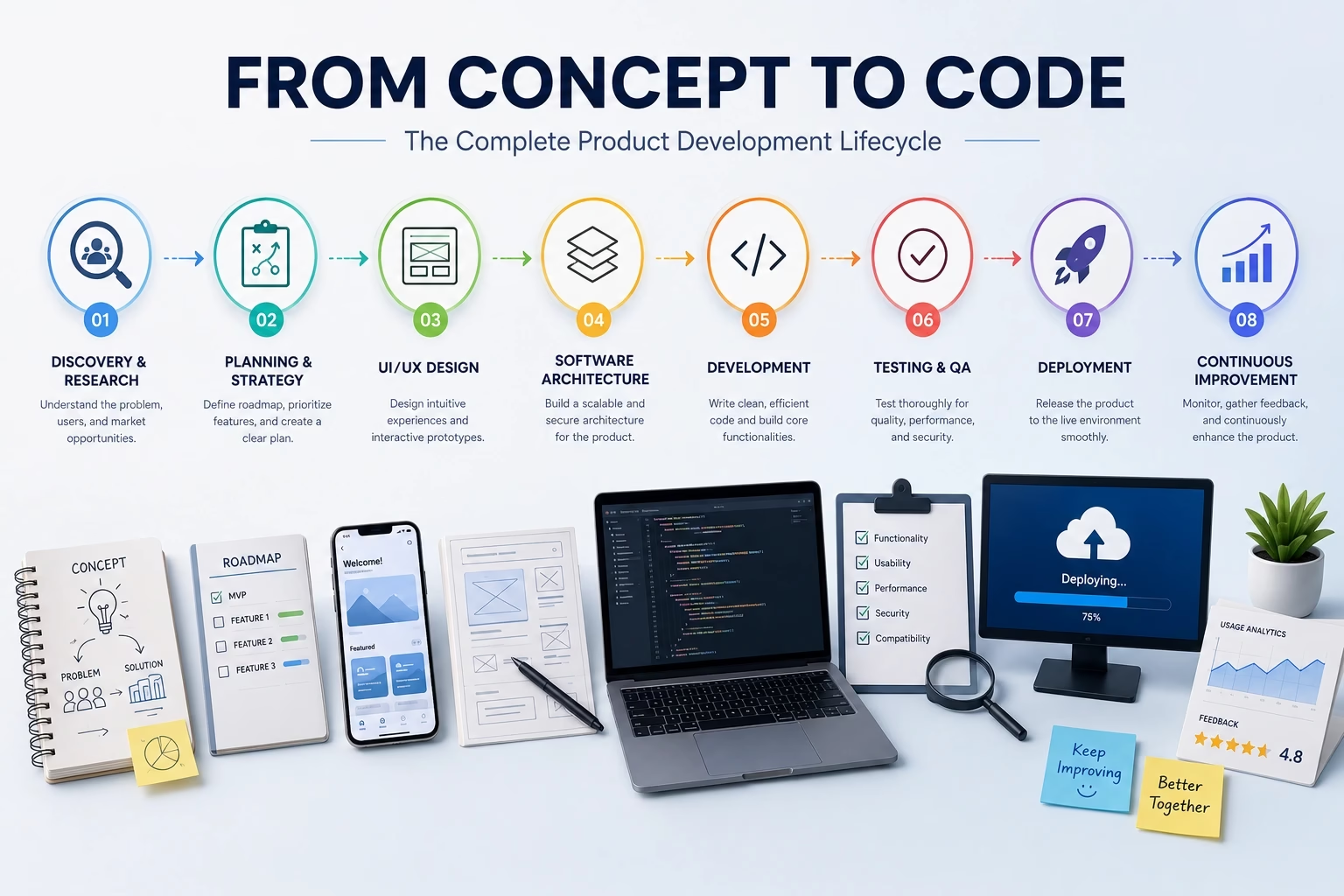
Although every project is unique, most successful digital products follow a similar lifecycle:
- Discovery & Research
- Planning & Strategy
- UI/UX Design
- Software Architecture
- Development
- Testing & Quality Assurance
- Deployment
- Maintenance & Continuous Improvement
Each phase builds upon the previous one, creating a clear roadmap from concept to launch.
1. Discovery & Research
Every successful product starts with understanding the problem it aims to solve. Before discussing technologies or features, teams should focus on identifying user needs, business objectives, and market opportunities.
Discovery often includes:
- Stakeholder interviews
- User research
- Competitor analysis
- Market validation
- Business requirements gathering
Skipping this stage frequently leads to products that solve the wrong problem or fail to meet user expectations.
Building the right product is far more important than building the product right.
2. Planning & Strategy
Once the vision is clear, it’s time to define the product roadmap. This phase transforms ideas into actionable plans by identifying priorities, defining project scope, and organizing development into manageable milestones.
A strong planning phase typically includes:
- Product roadmap
- Feature prioritization
- User stories
- Technical requirements
- Project timeline
- Risk assessment
Effective planning helps teams stay focused while maintaining flexibility as the product evolves.
3. UI/UX Design
Design is where ideas become tangible. Designers create wireframes, user flows, and interactive prototypes that define how users will interact with the product.
The goal isn’t simply to create attractive screens. Great UI/UX design removes friction, improves usability, and creates experiences users enjoy returning to.
Deliverables often include:
- User journey maps
- Wireframes
- High-fidelity mockups
- Interactive prototypes
- Design systems
Early design validation helps identify usability issues before development begins.
4. Software Architecture
Before writing production code, developers define the technical foundation of the product. Software architecture determines how different components interact, ensuring the system remains maintainable, secure, and scalable.
Key architectural decisions include:
- Frontend technologies
- Backend framework
- Database design
- API architecture
- Authentication strategy
- Cloud infrastructure
Investing time in architecture reduces technical debt and simplifies future expansion.
5. Development
With designs approved and architecture established, development begins. Frontend and backend teams work together to transform specifications into working software.
Modern development emphasizes collaboration, automation, and iterative delivery rather than waiting months before showing progress.
Development activities commonly include:
- Frontend implementation
- Backend development
- API integration
- Database implementation
- Authentication and security
- Performance optimization
Regular code reviews and version control ensure consistent quality throughout the project.
6. Testing & Quality Assurance
Quality assurance ensures the product performs as expected across different devices, browsers, and user scenarios.
Testing isn’t only about finding bugs. It’s about verifying that every feature delivers the intended value while maintaining reliability and security.
A comprehensive QA process often includes:
- Functional testing
- UI testing
- Performance testing
- Security testing
- Cross-browser testing
- User acceptance testing (UAT)
Addressing issues before launch reduces costly fixes later.
7. Deployment
Launching a product is an important milestone, but it isn’t the finish line. Deployment involves moving the application into a live production environment while ensuring minimal disruption for users.
A successful deployment process includes:
- Production configuration
- Database migration
- Monitoring setup
- Backup strategy
- Performance monitoring
Careful deployment planning minimizes downtime and provides a smooth transition from development to production.
8. Continuous Improvement
The most successful digital products never stop evolving. After launch, real user feedback becomes one of the most valuable sources of product insight.
Teams continuously analyze usage patterns, collect customer feedback, and introduce improvements based on changing business needs.
Continuous improvement often includes:
- Feature enhancements
- Performance optimization
- Security updates
- Bug fixes
- Analytics review
- User feedback implementation
Software should be treated as a living product rather than a one-time project.
Common Challenges During Product Development
Even experienced teams encounter challenges throughout the development lifecycle. Recognizing these risks early helps keep projects on track.
- Unclear project requirements.
- Changing business priorities.
- Poor communication between teams.
- Scope creep.
- Insufficient testing.
- Ignoring user feedback.
- Weak documentation.
Successful teams address these challenges through collaboration, transparency, and continuous planning.
Final Thoughts
Creating successful software is about much more than writing code. Every stage of the product development lifecycle plays a critical role in delivering solutions that are functional, scalable, and valuable to users.
By investing in discovery, thoughtful planning, user-centered design, solid architecture, rigorous testing, and continuous improvement, businesses can build products that not only launch successfully but continue delivering value long after release.
About Inastiv
At Inastiv, we help businesses transform ideas into high-quality digital products through strategic planning, user-centered design, modern software development, and long-term technical support. From initial discovery workshops to enterprise-grade applications, our team partners with clients throughout every stage of the product development lifecycle.