Estimated Reading Time: 9 minutes
Mobile users expect fast, reliable, and seamless digital experiences. Whether they’re shopping online, managing finances, booking appointments, or collaborating with colleagues, they expect applications to load instantly and perform consistently across every device.
For years, native mobile applications were considered the standard for delivering premium mobile experiences. However, advances in modern web technologies have introduced a compelling alternative: Progressive Web Apps (PWAs).
Progressive Web Apps combine the accessibility of websites with many of the capabilities traditionally associated with native mobile applications. They provide businesses with a faster, more cost-effective way to deliver exceptional user experiences without maintaining separate applications for multiple platforms.
In this guide, we’ll explore why Progressive Web Apps are transforming modern software development and why many organizations are choosing them over traditional native applications.
What Is a Progressive Web App?
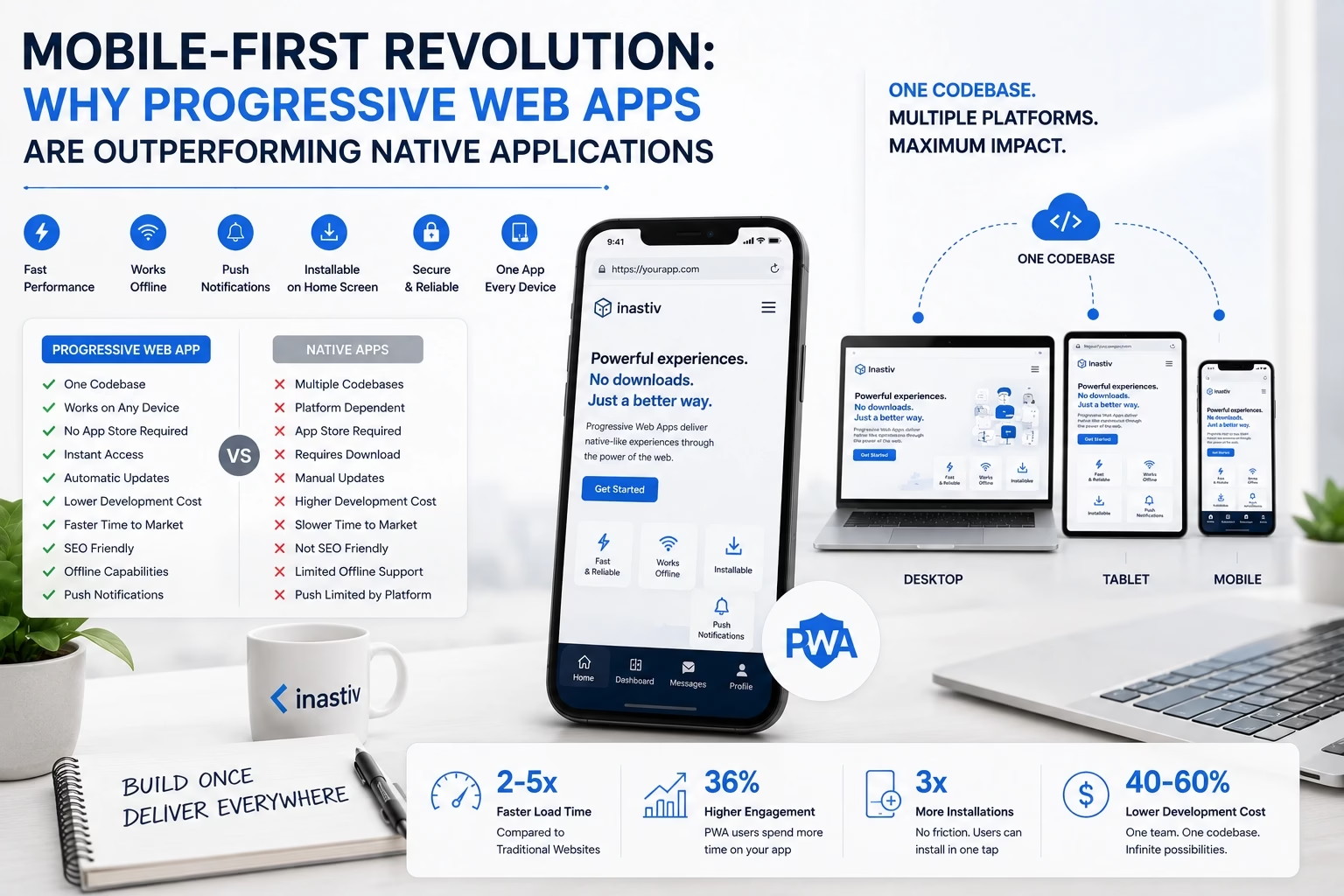
A Progressive Web App (PWA) is a web application that delivers an app-like experience directly through a web browser. Built using modern web technologies, PWAs can be installed on a user’s device, function offline, send push notifications, and provide fast, responsive interactions.
Unlike traditional websites, PWAs are designed to behave like native applications while remaining accessible through a simple URL.
Modern Progressive Web Apps typically support:
- Offline functionality
- Push notifications
- Home screen installation
- Background synchronization
- Responsive layouts
- Fast loading performance
- Secure HTTPS communication
This combination of features creates a user experience that closely resembles a native mobile application without requiring an App Store download.
Why Mobile-First Development Matters
Mobile devices have become the primary way people access digital services. Users frequently interact with websites and applications while commuting, traveling, shopping, or working remotely.
This shift has transformed mobile-first design from a design philosophy into a business necessity.
Organizations that prioritize mobile performance benefit from:
- Higher customer engagement.
- Improved conversion rates.
- Better search engine rankings.
- Increased customer retention.
- Greater accessibility across devices.
PWAs naturally align with mobile-first strategies because they are built around responsive web technologies from the beginning.
One Application Across Every Device
One of the biggest advantages of Progressive Web Apps is maintaining a single application that works consistently across desktops, tablets, and smartphones.
Rather than developing separate applications for Android, iOS, and the web, organizations can maintain a unified codebase that serves users everywhere.
This approach simplifies development while ensuring a consistent experience across all platforms.
One codebase. Multiple devices. A consistent experience everywhere.
Faster Development and Lower Costs
Developing and maintaining separate native applications often requires multiple teams, different technology stacks, and independent release cycles.
PWAs eliminate much of this complexity.
Benefits include:
- Single development workflow.
- Shared frontend code.
- Simplified maintenance.
- Faster feature releases.
- Reduced testing effort.
- Lower long-term development costs.
For startups and growing businesses, this efficiency can significantly accelerate time to market.
Performance That Users Notice
Speed directly influences user satisfaction.
Progressive Web Apps leverage modern browser capabilities such as caching, service workers, and optimized asset loading to deliver near-instant experiences even under less-than-ideal network conditions.
Performance improvements often include:
- Faster initial page loads.
- Smoother navigation.
- Reduced network requests.
- Offline support.
- Improved reliability on slow connections.
Fast applications encourage users to stay engaged and complete their intended tasks.
No App Store Required
One of the biggest barriers to native application adoption is the installation process.
Users must search for the application, download it, wait for installation, and keep it updated.
Progressive Web Apps simplify this experience.
Users can simply visit a website and begin using the application immediately. If they choose, they can later install it directly from their browser without navigating an app marketplace.
This frictionless experience often leads to higher adoption rates.
Better Discoverability Through Search Engines
Unlike native applications that depend primarily on app store visibility, PWAs remain fully searchable through traditional search engines.
This creates significant marketing advantages.
Organizations can benefit from:
- Organic search traffic.
- Content indexing.
- Shareable URLs.
- Improved SEO performance.
- Greater online visibility.
Every page within a Progressive Web App can contribute to an organization’s digital marketing strategy.
When Native Applications Still Make Sense
Although Progressive Web Apps offer many advantages, native applications remain the better choice for certain use cases.
Native development may be preferable when applications require:
- Advanced hardware integration.
- High-performance graphics.
- Augmented reality (AR).
- Complex gaming experiences.
- Specialized device APIs.
The right solution depends on the product’s goals, target audience, and technical requirements.
Choosing the Right Architecture
Rather than asking whether PWAs are replacing native applications, organizations should evaluate which architecture best supports their business objectives.
Questions worth considering include:
- Who are your target users?
- How frequently will the application evolve?
- What devices will users rely on?
- How important is rapid development?
- What is the long-term maintenance strategy?
Answering these questions helps determine whether a Progressive Web App, native application, or hybrid approach provides the greatest value.
The Future of Mobile Applications
Modern browsers continue to expand their capabilities, allowing Progressive Web Apps to access more device features while delivering increasingly sophisticated experiences.
As businesses prioritize speed, accessibility, scalability, and cost efficiency, PWAs are becoming an increasingly attractive solution for digital products across industries.
While native applications will always have an important place, Progressive Web Apps are reshaping how organizations approach mobile-first development by offering a practical balance between performance, reach, and development efficiency.
Final Thoughts
The evolution of web technologies has significantly narrowed the gap between websites and native applications. Progressive Web Apps demonstrate that organizations no longer need to choose between accessibility and performance.
By embracing mobile-first principles and leveraging modern web standards, businesses can deliver high-quality digital experiences that are fast, reliable, and accessible across virtually every device.
For many organizations, Progressive Web Apps represent not only a technical advancement but also a smarter long-term investment in digital product development.
About Inastiv
At Inastiv, we build modern web and mobile solutions that combine exceptional performance with scalable architecture. Whether developing Progressive Web Apps, enterprise platforms, responsive websites, or custom software, our team helps businesses deliver seamless digital experiences that perform consistently across every device.